
Wolverine Blend 10mg vs. 20mg vs. Two-Vial Stacks: Deconstructing TB-500 Mass, 1:1 Molar Ratios, and Formulation Realities
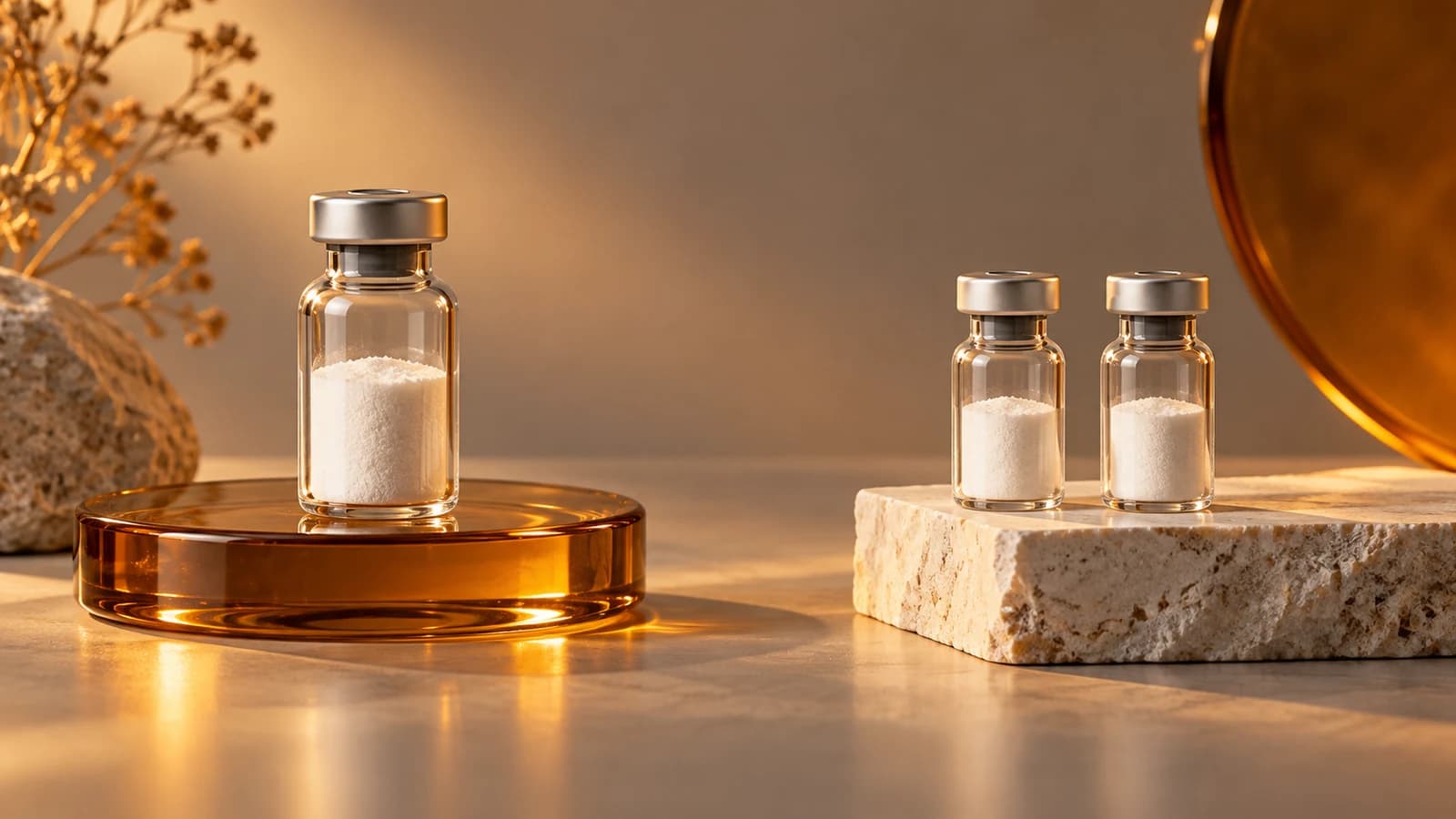
In this article
- Quick Reference / Direct Sourcing Takeaways
- 1. Decoding the "Wolverine" Label: Total Cake Weight vs. Constituent Splits
- 2. The Stoichiometric Reality: Equal Mass Is Not Equal Molecules
- 3. Blend Vials vs. Two-Vial Stacks: The Formulation Trade-Offs
- 4. Analytical Quality Control: Chromatography of Co-Lyophilized Cakes
- Sourcing Musculoskeletal & Cellular Repair Peptides
Quick Reference / Direct Sourcing Takeaways
- The "Wolverine" Labeling Myth: "Wolverine" is a non-standardized commercial colloquialism for co-administered tissue repair sequences, typically combining BPC-157 and TB-500 (Thymosin β-4 or its active fragment). Product titles specifying 10mg or 20mg represent aggregate vial mass, never the individual weight of each constituent peptide unless explicitly labeled as a split (e.g., 5mg/5mg or 10mg/10mg).
- Mass Ratio vs. Molar Reality: A 1:1 mass ratio (5mg:5mg) does not equal a 1:1 molecular count. Because BPC-157 (MW ≈ 1419.5 g/mol) has a significantly lower molecular weight than full-length Thymosin β-4 (MW ≈ 4963.4 g/mol), equal mass yields more than 3.4 times as many BPC-157 molecules as TB-4 molecules.
- Fixed Blends vs. Two-Vial Separate Stacks: Co-lyophilized single vials lock the stoichiometric ratio at the time of primary synthesis and force joint reconstitution. Independent dual-vial stacks provide complete dosing flexibility, variable titration curves, and independent shelf-life management.
- Analytical Benchmark: Co-lyophilized blends require dual-wavelength reversed-phase HPLC peak deconvolution and dual-ion mass spectrometry confirmation to ensure both peptide fractions are present in declared quantities without cross-sequence degradants.
Across musculoskeletal recovery channels, clinic procurement desks, and sports medicine discussion boards—including recent debates on r/NTNPerformance and r/GLP1ResearchTalk—a critical analytical question has surfaced regarding popular tissue repair stacks: When purchasing a "10mg" or "20mg" Wolverine blend, what is the actual milligram content of TB-500 versus BPC-157? Does a 1:1 mass blend deliver balanced molecular signaling, and why do clinic directors and formulators increasingly favor two-vial separate stacks over pre-mixed single vials?
Procurement teams, aesthetic clinic owners, compound resellers, and independent researchers frequently confront confusing commercial catalogs. Retail vendors market single vials labeled "Wolverine 10mg" without disclosing whether the vial holds 5mg/5mg, 7mg/3mg, or an underdosed mixture. Others sell "20mg blends" alongside two-vial kits containing 10mg of each peptide, leading buyers to conflate aggregate cake weight with individual potency. Furthermore, as highlighted by analytical researchers running molar calculations online: equal mass does not translate to equal molecules, and equal molecules do not translate to equal in-vivo potency.
At Zorapep, our manufacturing foundation centers on Musculoskeletal & Cellular Repair Peptide Synthesis. Below, our analytical chemistry operations team breaks down the stoichiometry of dual-peptide blends, the chemical differences between full-length Thymosin β-4 and TB-500 fragments, and how to verify co-lyophilized products before sourcing.
1. Decoding the "Wolverine" Label: Total Cake Weight vs. Constituent Splits
The commercial moniker "Wolverine" originated in online biohacking and bodybuilding circles to describe the stacked administration of BPC-157 (for focal angiogenesis, collagen deposition, and growth hormone receptor upregulation) and TB-500 (for G-actin sequestration, myofibrillar cell motility, and anti-fibrotic remodeling).
In commercial peptide manufacturing and contract lyophilization, naming conventions fall into three distinct physical configurations:
                          ┌─────────────────────────────────────────────────────────┐
                          │               The "Wolverine" Formulation               │
                          │                BPC-157 + TB-500 Stack                   │
                          └────────────────────────────┬────────────────────────────┘
                                                       │
                   ┌───────────────────────────────────┴───────────────────────────────────┐
                   ▼                                                                       ▼
    ┌─────────────────────────────┐                                         ┌─────────────────────────────┐
    │  Co-Lyophilized Blend Vial  │                                         │   Two-Vial Separate Stack   │
    │   (Single Cake Synthesis)   │                                         │    (Dual Independent Vials) │
    └──────────────┬──────────────┘                                         └──────────────┬──────────────┘
                   │                                                                       │
         ┌─────────┴─────────┐                                                   ┌─────────┴─────────┐
         ▼                   ▼                                                   ▼                   ▼
  10mg Total Cake     20mg Total Cake                                     1x BPC-157 Vial     1x TB-500 Vial
(5mg BPC / 5mg TB) (10mg BPC / 10mg TB) (e.g., 5mg or 10mg) (e.g., 5mg or 10mg)- 10mg Co-Lyophilized Blend (5/5 Split): A single vial stating "10mg Wolverine" almost universally represents a 5mg BPC-157 + 5mg TB-500 co-lyophilized cake. The 10mg figure is the aggregate mass of both active peptides combined. It does not supply 10mg of each active substance.
- 20mg Co-Lyophilized Blend (10/10 Split): A single vial labeled "20mg Wolverine" contains 10mg BPC-157 + 10mg TB-500. Reconstituting a 10mg vial using the dilution calculations meant for a 20mg vial reduces delivered concentration by 50%, skewing cellular assay parameters or clinical administration protocols.
- Two-Vial Separate Stack (e.g., 5mg + 5mg or 10mg + 10mg): Two independent, sterile, vacuum-sealed vials—one containing pure Zorapep BPC-157 and the other containing pure Zorapep TB-500. The total product package delivers either 10mg or 20mg across two dedicated containers, allowing independent reconstitution volumes, separate injection pathways, and custom dosing titration.
If a supplier listing simply states "Wolverine Blend" without explicitly documenting the per-component mass breakdown (e.g., 5/5 or 10/10), the procurement desk must verify the split on the analytical Certificate of Analysis before issuing a purchase order.
2. The Stoichiometric Reality: Equal Mass Is Not Equal Molecules
A widespread misconception across clinical and personal buying segments is that a 1:1 mass ratio (such as 5mg of BPC-157 mixed with 5mg of TB-500) provides an equivalent 1:1 molecular balance.
To demonstrate why this assumption is chemically false, we must calculate the molar yield using the molecular weight (MW) of the active sequences:
Moles (n) = Mass (m)Molecular Weight (MW)
Scenario A: BPC-157 Co-Lyophilized with Full-Length Thymosin β-4 (MW ≈ 4963.4 g/mol)
Many primary synthesis facilities and compounding laboratories utilize synthetic, full-sequence 43-amino-acid Thymosin β-4 under the commercial catalog name TB-500:
- BPC-157 (MW ≈ 1419.5 g/mol): nBPC = 5.0 × 10⁻³ g1419.5 g/mol ≈ 3.52 × 10⁻⁶ moles (3.52 μmol)
- Thymosin β-4 (MW ≈ 4963.4 g/mol): nTβ4 = 5.0 × 10⁻³ g4963.4 g/mol ≈ 1.01 × 10⁻⁶ moles (1.01 μmol)
- Molar Ratio: Ratio = 3.52 μmol1.01 μmol ≈ 3.49 : 1
In a standard 5mg/5mg mass blend with full-length Tβ4, the vial delivers approximately 3.5 times more individual BPC-157 molecules than Thymosin β-4 molecules.
Scenario B: BPC-157 Co-Lyophilized with the Truncated TB-500 Ac-LKKTETQ Heptapeptide (MW ≈ 888.0 g/mol)
Conversely, if a supplier synthesizes the short 7-amino-acid active actin-binding fragment (Ac-Leu-Lys-Lys-Thr-Glu-Thr-Gln, residues 17–23 of Tβ4):
- TB-500 Heptapeptide (MW ≈ 888.0 g/mol): nFrag = 5.0 × 10⁻³ g888.0 g/mol ≈ 5.63 × 10⁻⁶ moles (5.63 μmol)
- Molar Ratio: Ratio = 5.63 μmol3.52 μmol ≈ 1.60 : 1 (TB-500 fragment excess)
Why Molar Equivalence Does Not Dictate Biological Potency
As noted by biochemical researchers on r/NTNPerformance: "Equal molecules does not translate to equal potency." BPC-157 and TB-500 operate across completely divergent biological systems:
- BPC-157 acts via early growth response 1 (EGR-1) gene activation, FAK-paxillin focal adhesion kinase phosphorylation, and local VEGFR2 upregulation.
- Thymosin β-4 acts through stoichiometric binding of monomeric G-actin, downregulating pro-fibrotic signaling while stimulating cell migration across damaged extracellular matrices.
Because their cellular receptor affinities, target protein dissociation constants (Kd), and biological elimination half-lives differ, trying to force an arbitrary 1:1 molar ratio is pharmacologically unnecessary. However, knowing the exact per-component mass is non-negotiable for reproducible laboratory experiments and structured recovery protocols.
3. Blend Vials vs. Two-Vial Stacks: The Formulation Trade-Offs
When medical aesthetics centers, orthopedic clinics, and peptide resellers evaluate their options, choosing between single-vial blends and multi-vial stacks involves distinct trade-offs:
Swipe or scroll to compare all columns.
| Technical Parameter | Single-Vial Co-Lyophilized Blend (e.g., 5/5 or 10/10) | Two-Vial Independent Stack (BPC-157 + TB-500 Vials) | Multi-Pathway Complex (e.g., BPC + GHK-Cu + TB-500) |
|---|---|---|---|
| Physical Presentation | Single freeze-dried cake containing both sequences | Two separate, sterile vacuum-sealed vials | Tri-peptide co-lyophilized formulation cake |
| Constituent Ratio Control | Locked at manufacture (Fixed 1:1 mass split) | Fully flexible (Variable dosing titrations permitted) | Locked multi-pathway tissue remodeling split |
| Reconstitution Complexity | Single injection of bacteriostatic water | Two separate diluent steps; separate or combined administration | Single diluent injection step |
| Analytical HPLC Validation | Requires multi-peak separation and deconvolution | Standard single-peak baseline resolution per vial | Requires specialized tri-peak spectral deconvolution |
| Solution Stability & Degradation | Higher risk: differing optimal pH and degradation profiles | Optimal: Each sequence stored in dedicated buffer | Strict pH control required to prevent copper chelation disruption |
| Primary End-User Profile | Personal researchers seeking handling convenience | Orthopedic clinics, research institutions, resellers | Advanced regenerative medicine clinics, medspas |
Advantages of the Two-Vial Stack
Purchasing separate vials of BPC-157 and TB-500 offers clinical researchers and clinic managers unmatched operational control. TB-500 protocols frequently utilize loading and maintenance phases (e.g., bi-weekly administration), while BPC-157 protocols typically follow daily or twice-daily routines. A single pre-mixed blend locks the practitioner into a static ratio. By stocking separate vials, clinics can adjust protocols dynamically to match tissue injury severity.
Advanced Multi-Pathway Solutions: The Tri-Blend
For specialized regenerative medicine applications targeting concurrent skin, connective tissue, and vascular recovery, advanced facilities utilize verified tri-peptide complexes. Explore the Zorapep BPC-157 + GHK-Cu + TB-500 Formulation to inspect how copper-tripeptide matrix remodeling integrates with actin-polymerizing cellular repair factors.
4. Analytical Quality Control: Chromatography of Co-Lyophilized Cakes
Verifying a dual-peptide blend requires far more analytical rigor than testing a single-sequence vial. Low-tier resellers frequently purchase generic bulk powders, blend them without cleanroom environmental controls, and issue generic pass/fail certificates that evaluate total peptide nitrogen rather than resolving individual active peaks.
Zorapep enforces uncompromising analytical standards across every batch produced in our facilities, detailed in our Quality Control & Analytical Testing Standards:
- Reversed-Phase HPLC Peak Deconvolution: Because the 15-amino-acid chain of BPC-157 and the 43-amino-acid (or 7-amino-acid) chain of TB-500 possess distinct hydrophobic indices, our analytical testing utilizes optimized acetonitrile/water gradients containing 0.1% TFA. This achieves complete baseline separation of both primary peaks without co-eluting shoulder impurities, verifying ≥ 99.0% chromatographic purity for both active substances.
- Liquid Chromatography-Mass Spectrometry (LC-MS): Every production run confirms the specific monoisotopic mass ions of both compounds within the same lyophilized cake—confirming BPC-157 at [M+H]+ = 1419.5 g/mol and TB-500 at its verified mass signature.
- Sub-Threshold TFA Ion-Exchange: Unpurified TFA crude salts accelerate peptide cleavage and cross-chain deamidation when two distinct sequences share an aqueous environment. We conduct automated multi-cycle ion exchange to deliver stable, high-affinity acetate salts, documented under our Custom Peptide Synthesis Capabilities.
- Transparent Raw Spectra: Every packaged lot displays a traceable Lot Number paired with verifiable UV integration chromatograms, instantly accessible via our online COA Verification Portal.
Sourcing Musculoskeletal & Cellular Repair Peptides
Eliminate dosing uncertainty, unlisted blend ratios, and inflated reseller markups. Deepen your understanding of cellular motility and tissue remodeling mechanisms by reviewing our clinical research dossier at the Zorapep TB-500 Musculoskeletal & Actin Dynamics Hub.
Whether you manage an orthopedic wellness center, oversee private-label compounding, or direct institutional research, Zorapep supplies factory-direct, analytical-grade solutions tailored to your operational scale:
- Review single-sequence specifications for pure Zorapep BPC-157 Vials, standalone Zorapep TB-500 Vials, and high-potency Zorapep GHK-Cu Vials.
- Browse our comprehensive catalog of standalone and combined sequences via the Zorapep Product Catalog.
- For branded clinic inventory or contract manufacturing, explore our Wholesale & Private Label Services.
- Speak directly with an analytical chemist via our Live Sales Consultation Desk or through our Direct Contact Page.
- Ready to secure stable, laboratory-verified inventory? Submit an Institutional Tiered Quote Request today for bulk wholesale pricing, custom dual-vial stack configurations, and reliable DDP air-freight delivery.
Disclaimer: All compounds and formulation presentations manufactured and distributed by Zorapep are intended strictly for in-vitro laboratory research, analytical testing, and cellular repair model development (Research Use Only, RUO). They are not synthesized, approved, or sold for direct human or veterinary administration, clinical diagnostic evaluation, or therapeutic medical interventions.